声明
本文代码均保存在
https://github.com/super-213/business_data_analysis
有需要的可以自行下载
查看数据
1
2
| df = pd.read_excel('客户信息及违约表现.xlsx')
df.head()
|
| 收入 |
年龄 |
性别 |
历史授信额度 |
历史违约次数 |
是否违约 |
| 462087 |
26 |
1 |
0 |
1 |
1 |
| 362324 |
32 |
0 |
13583 |
0 |
1 |
| 332011 |
52 |
1 |
0 |
1 |
1 |
| 252895 |
39 |
0 |
0 |
1 |
1 |
| 352355 |
50 |
1 |
0 |
0 |
1 |
缺失值处理
异常值处理
1
2
3
4
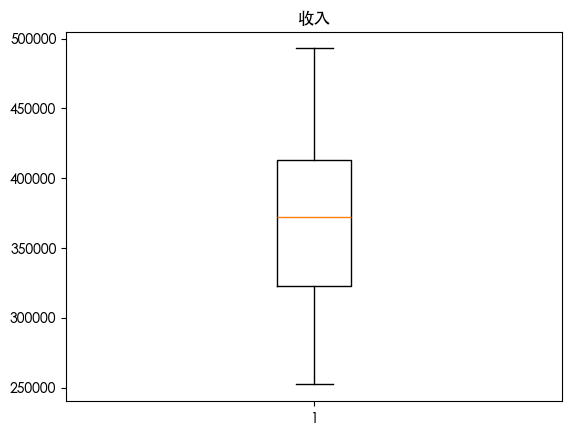
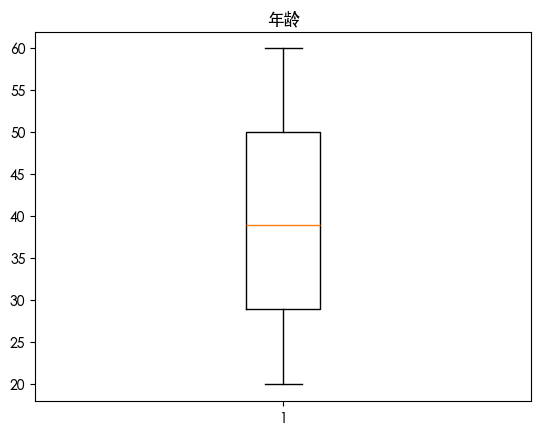
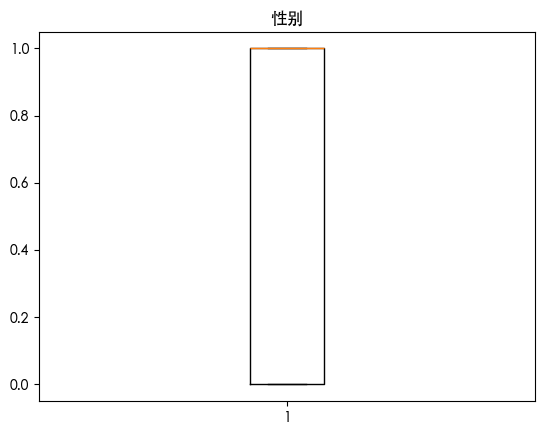
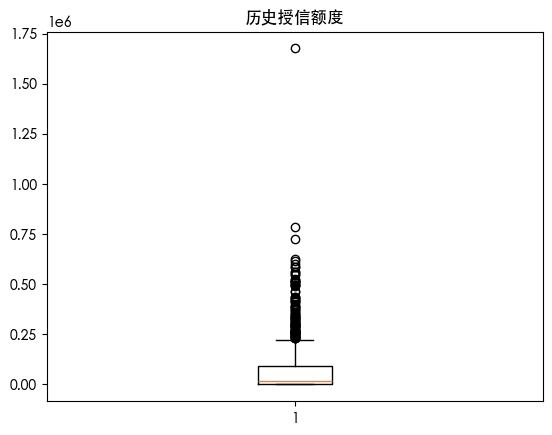
| for col in df.columns:
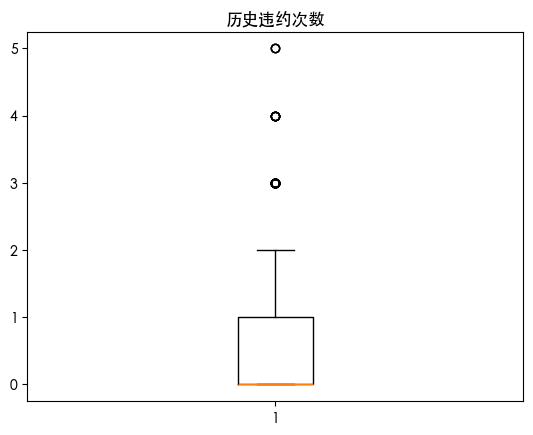
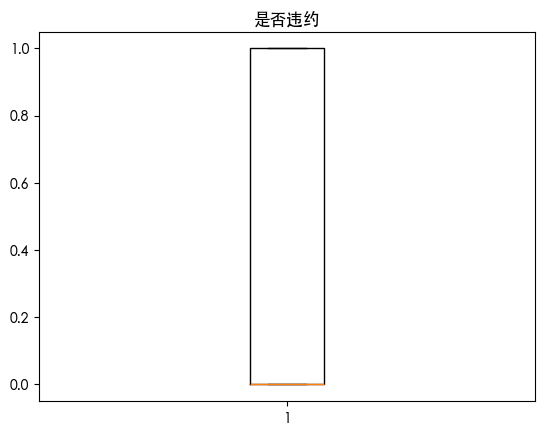
plt.boxplot(df[col])
plt.title(col)
plt.show()
|

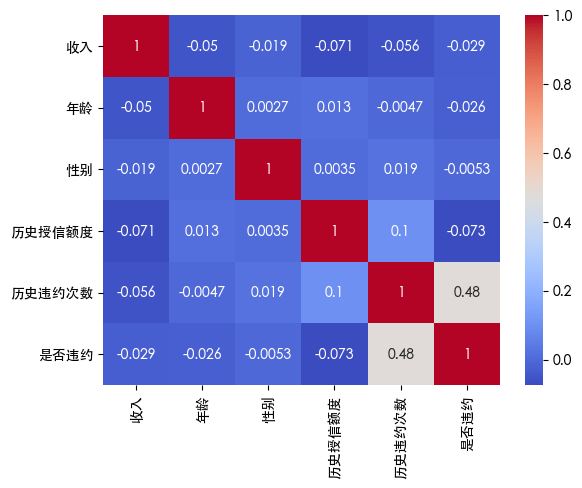
发现两个特征存在异常值 使用热力图查看特征之间的关系
1
2
3
4
| import seaborn as sns
sns.heatmap(df.corr(), annot=True, cmap='coolwarm')
plt.show()
|
看到 历史违约次数和是否违约相关性很大 并且历史违约次数存在异常值 因此新增此特征的异常值特征列
1
2
3
4
5
6
7
8
9
10
11
12
| col = '历史违约次数'
Q1 = df[col].quantile(0.25)
Q3 = df[col].quantile(0.75)
IQR = Q3 - Q1
lower_bound = Q1 - 1.5 * IQR
upper_bound = Q3 + 1.5 * IQR
df[f'{col}_is_outlier'] = ((df[col] < lower_bound) | (df[col] > upper_bound)).astype(int)
df = df.drop(columns=['历史授信额度'])
|
继续查看另一个异常值的特征分布
1
2
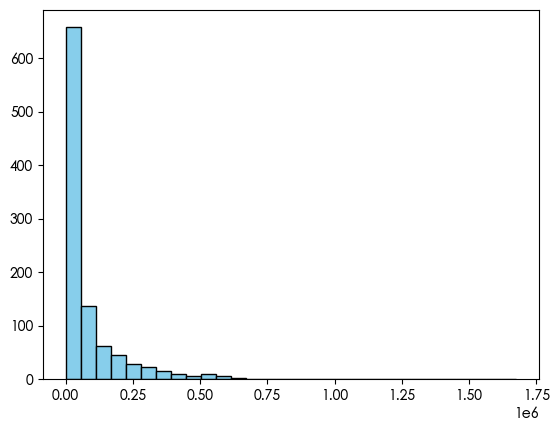
| plt.hist(df['历史授信额度'], bins=30, color='skyblue', edgecolor='black')
plt.show()
|
可以看到 数据是右偏的 并且是长尾分布 对于此数据 使用对数变换
1
2
3
| import numpy as np
col = '历史授信额度'
df[f'{col}_log'] = np.log1p(df[col])
|
数据划分
1
2
3
4
5
| X = df.drop(columns=['是否违约'])
y = df['是否违约']
from sklearn.model_selection import train_test_split
X_train, X_test, y_train, y_test = train_test_split(X, y, test_size=0.2, random_state=42)
|
XGBoost
1
2
3
4
5
6
7
8
9
10
11
12
13
14
15
16
| from xgboost import XGBClassifier
xgb = XGBClassifier(
n_estimators=100,
learning_rate=0.1,
max_depth=5,
subsample=0.8,
colsample_bytree=0.8,
random_state=42
)
xgb.fit(X_train, y_train)
y_pred = xgb.predict(X_test)
from sklearn.metrics import classification_report, confusion_matrix
print(confusion_matrix(y_test, y_pred))
print(classification_report(y_test, y_pred))
|
| 实际 \ 预测 |
0 |
1 |
| 0 |
110 |
9 |
| 1 |
29 |
52 |
| 类别 |
Precision |
Recall |
F1-Score |
Support |
| 0 |
0.79 |
0.92 |
0.85 |
119 |
| 1 |
0.85 |
0.64 |
0.73 |
81 |
| accuracy |
|
|
0.81 |
200 |
| macro avg |
0.82 |
0.78 |
0.79 |
200 |
| weighted avg |
0.82 |
0.81 |
0.80 |
200 |
LGBM
1
2
3
4
5
6
7
8
9
10
11
12
13
14
15
16
| from lightgbm import LGBMClassifier
lgbm = LGBMClassifier(
n_estimators=100,
learning_rate=0.1,
max_depth=5,
subsample=0.8,
colsample_bytree=0.8,
random_state=42
)
lgbm.fit(X_train, y_train)
y_pred = lgbm.predict(X_test)
from sklearn.metrics import classification_report, confusion_matrix
print(confusion_matrix(y_test, y_pred))
print(classification_report(y_test, y_pred))
|
| 实际 \ 预测 |
0 |
1 |
| 0 |
113 |
6 |
| 1 |
29 |
52 |
| 类别 |
Precision |
Recall |
F1-Score |
Support |
| 0 |
0.80 |
0.95 |
0.87 |
119 |
| 1 |
0.90 |
0.64 |
0.75 |
81 |
| accuracy |
|
|
0.82 |
200 |
| macro avg |
0.85 |
0.80 |
0.81 |
200 |
| weighted avg |
0.84 |
0.82 |
0.82 |
200 |
随机森林
1
2
3
4
5
6
7
8
9
10
11
12
13
| from sklearn.ensemble import RandomForestClassifier
rm = RandomForestClassifier(
n_estimators=100,
max_depth=5,
random_state=42
)
rm.fit(X_train, y_train)
y_pred = rm.predict(X_test)
from sklearn.metrics import classification_report, confusion_matrix
print(confusion_matrix(y_test, y_pred))
print(classification_report(y_test, y_pred))
|
| 实际 \ 预测 |
0 |
1 |
| 0 |
117 |
2 |
| 1 |
29 |
52 |
| 类别 |
Precision |
Recall |
F1-Score |
Support |
| 0 |
0.80 |
0.98 |
0.88 |
119 |
| 1 |
0.96 |
0.64 |
0.77 |
81 |
| accuracy |
|
|
0.84 |
200 |
| macro avg |
0.88 |
0.81 |
0.83 |
200 |
| weighted avg |
0.87 |
0.84 |
0.84 |
200 |
贝叶斯
1
2
3
4
5
6
7
8
9
| from sklearn.naive_bayes import GaussianNB
nb = GaussianNB()
nb.fit(X_train, y_train)
y_pred = nb.predict(X_test)
from sklearn.metrics import classification_report, confusion_matrix
print(confusion_matrix(y_test, y_pred))
print(classification_report(y_test, y_pred))
|
| 实际 \ 预测 |
0 |
1 |
| 0 |
111 |
8 |
| 1 |
43 |
38 |
| 类别 |
Precision |
Recall |
F1-Score |
Support |
| 0 |
0.72 |
0.93 |
0.81 |
119 |
| 1 |
0.83 |
0.47 |
0.60 |
81 |
| accuracy |
|
|
0.74 |
200 |
| macro avg |
0.77 |
0.70 |
0.71 |
200 |
| weighted avg |
0.76 |
0.74 |
0.73 |
200 |
逻辑回归
1
2
3
4
5
6
7
8
9
| from sklearn.linear_model import LogisticRegression
lr = LogisticRegression()
lr.fit(X_train, y_train)
y_pred = lr.predict(X_test)
from sklearn.metrics import classification_report, confusion_matrix
print(confusion_matrix(y_test, y_pred))
print(classification_report(y_test, y_pred))
|
| 实际 \ 预测 |
0 |
1 |
| 0 |
88 |
31 |
| 1 |
60 |
21 |
| 类别 |
Precision |
Recall |
F1-Score |
Support |
| 0 |
0.59 |
0.74 |
0.66 |
119 |
| 1 |
0.40 |
0.26 |
0.32 |
81 |
| accuracy |
|
|
0.55 |
200 |
| macro avg |
0.50 |
0.50 |
0.49 |
200 |
| weighted avg |
0.52 |
0.55 |
0.52 |
200 |
模型横向对比
XGBoost
- 整体表现: Accuracy = 0.81
- 优点:
- Precision 对 1 类 较高 (0.85),但 Recall 偏低 (0.64)
- 说明它比较谨慎 预测为违约时大多是真的(低假阳性)但漏掉了不少实际违约(高假阴性)
- 适合在误判正常人为违约成本高的场景
LightGBM
- 整体表现: Accuracy = 0.82(略高于 XGB)
- 优点:
- 对类别 1 的 Precision 更高 (0.90) Recall 同样偏低 (0.64)
- 预测结果更保守 对 1 的识别严格 但仍漏掉一部分违约客户
- 对比 XGBoost:性能非常接近,但 LightGBM 对类别 0 的 Recall 更高 对正常客户的识别更稳
随机森林
- 整体表现: Accuracy = 0.84
- 优点:
- 类别 0 的 Recall 极高 几乎不会把正常客户错判为违约
- 类别 1 的 Precision 很高 (0.96),但 Recall 仍然只有 0.64 但还是漏掉部分
- 特点:
- Bagging 思路让它在这类低维表格数据上表现最稳健。
- 如果更在意总体准确率和稳健性,随机森林是首选。
朴素贝叶斯
- 整体表现: Accuracy = 0.74
- 优点: 对类别 0 Recall 较高
- 缺点: 类别 1 Recall 低 几乎一半违约客户都漏掉。
- 原因:
- 假设特征独立,这在客户数据里往往不成立 会导致性能下降
逻辑回归
- 整体表现: Accuracy = 0.55
- 缺点:
- 类别 1 的 Recall 极低 大部分违约客户被判成了正常
- 说明数据中的关系并不是线性可分的 逻辑回归模型过于简单
- 适用场景:
- 在数据高度线性且变量少时可用 但在这个复杂数据集上严重欠拟合
总结
| 模型 |
Accuracy |
类别 1 (违约) Recall |
特点 |
| 随机森林 |
0.84 |
0.64 |
最优表现,稳健,几乎不误判正常客户 |
| LightGBM |
0.82 |
0.64 |
高效,Precision 高,Recall 偏低 |
| XGBoost |
0.81 |
0.64 |
与 LGBM 接近,偏保守 |
| 朴素贝叶斯 |
0.74 |
0.47 |
偏弱,假设不符合实际 |
| 逻辑回归 |
0.55 |
0.26 |
严重欠拟合,不适合此任务 |
结论:
- 整体上 树模型(RF、XGB、LGBM)表现远优于线性模型(LR)和简单概率模型(NB)
- 随机森林在这里是最佳选择,因为它在准确率和稳定性上均优 并且对违约的准确率特别高
- 但三种树模型都有一个共性:违约 Recall 偏低(都在 0.64 左右) 意味着有不少违约客户没被识别出来