声明 本文代码均保存在https://github.com/super-213/business_data_analysis
查看数据 1 2 df = pd.read_excel('信用评分卡模型.xlsx' )df.head()
月收入
年龄
性别
历史授信额度
历史违约次数
信用评分
7783
29
0
32274
3
73
7836
40
1
6681
4
72
6398
25
0
26038
2
74
6483
23
1
24584
4
65
5167
23
1
6710
3
73
缺失值处理
字段
缺失值数量
月收入
0
年龄
0
性别
0
历史授信额度
0
历史违约次数
0
信用评分
0
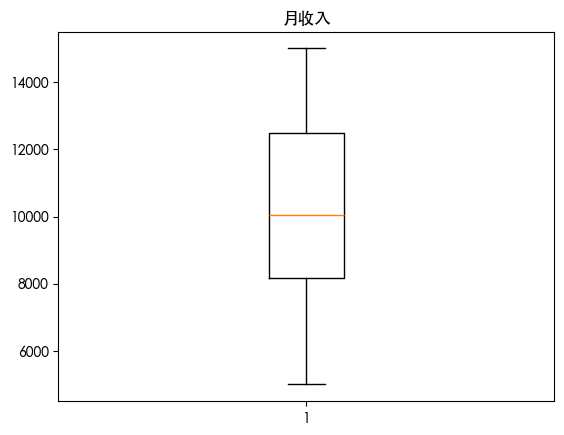
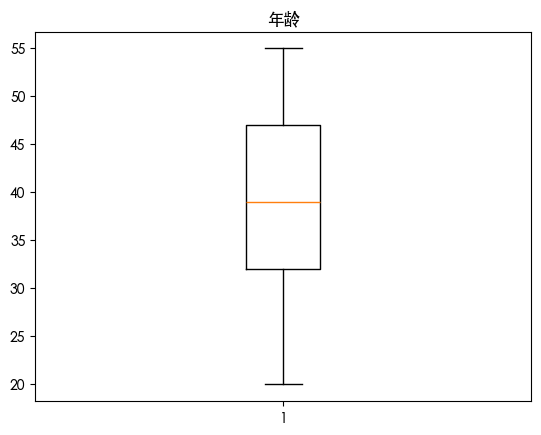
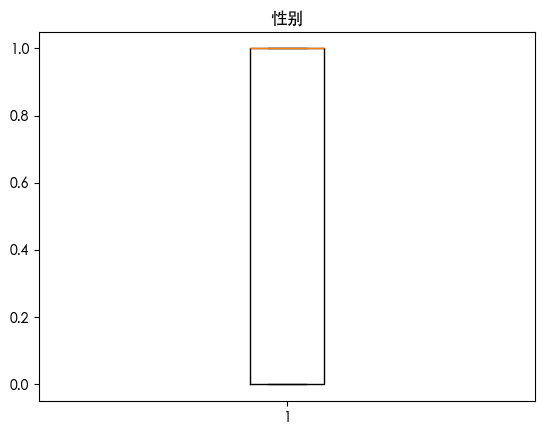
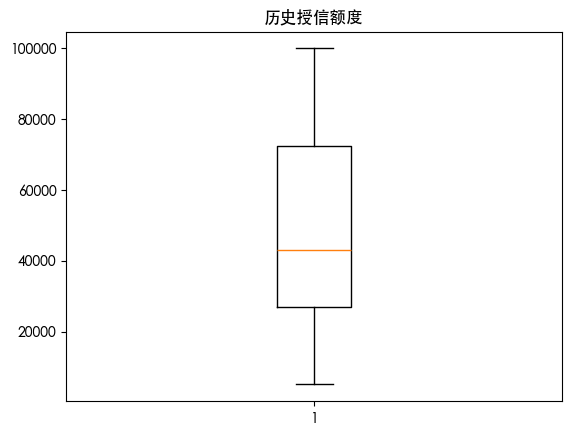
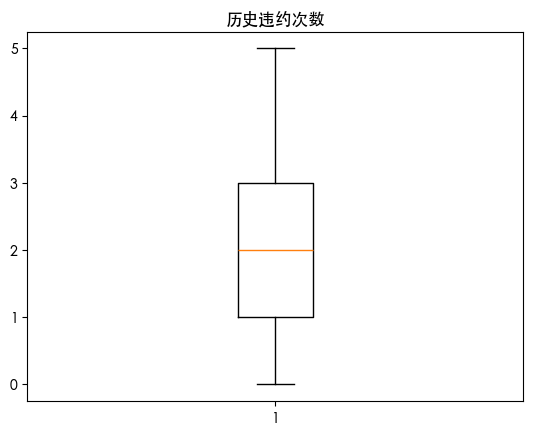
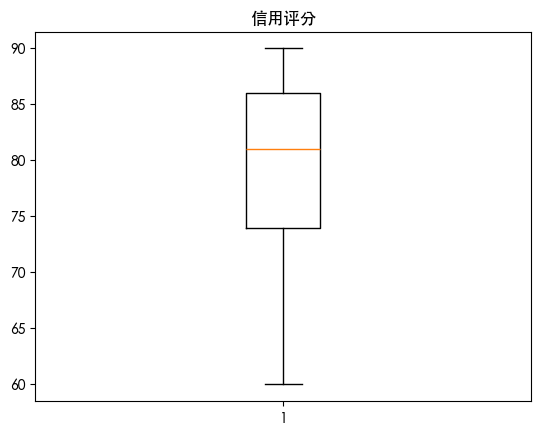
异常值处理 1 2 3 4 for col in df.columns: plt.boxplot(df [col]) plt.title(col) plt.show()
数据划分 1 2 3 4 from sklearn.model_selection import train_test_split X = df.drop(columns=['信用评分' ]) y = df ['信用评分' ] X_train, X_test, y_train, y_test = train_test_split(X, y, test_size=0.2, random_state=42)
XGBoost 1 2 3 4 5 6 7 8 9 10 11 from xgboost import XGBRegressor xgb = XGBRegressor(objective='reg:squarederror' , random_state=42) xgb.fit(X_train, y_train) y_pred = xgb.predict(X_test) from sklearn.metrics import mean_squared_error, r2_score mse = mean_squared_error(y_test, y_pred) r2 = r2_score(y_test, y_pred) print (f'Mean Squared Error: {mse}' )print (f'R^2 Score: {r2}' )
Mean Squared Error: 30.737820683092288
网格优化 1 2 3 4 5 6 7 8 9 10 11 12 13 from sklearn.model_selection import GridSearchCV parameters = {'max_depth' : [1, 3, 5], 'n_estimators' : [50, 100, 150], 'learning_rate' : [0.01, 0.05, 0.1, 0.2]} xgb_best = XGBRegressor() grid_search = GridSearchCV(xgb_best, parameters, cv=5, scoring='neg_mean_squared_error' ) grid_search.fit(X_train, y_train) print ("Best parameters:" , grid_search.best_params_)best_xgb = grid_search.best_estimator_ y_pred_best = best_xgb.predict(X_test) mse_best = mean_squared_error(y_test, y_pred_best) r2_best = r2_score(y_test, y_pred_best) print (f'Optimized Mean Squared Error: {mse_best}' )print (f'Optimized R^2 Score: {r2_best}' )
Best parameters: {‘learning_rate’: 0.05, ‘max_depth’: 3, ‘n_estimators’: 50}
Optimized Mean Squared Error: 22.005304773406532
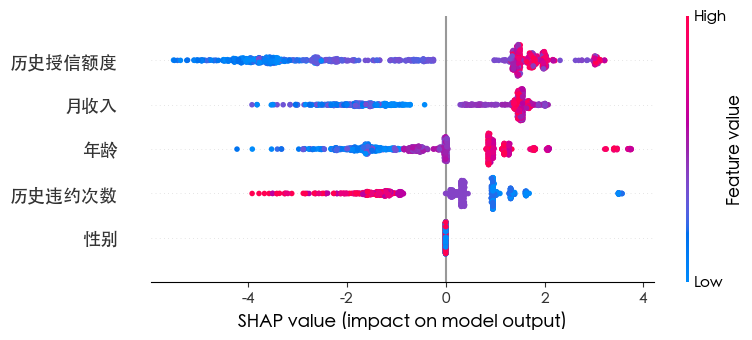
1 2 3 4 5 feature_importances = best_xgb.feature_importances_ features = X.columns importance_df = pd.DataFrame({'Feature' : features, 'Importance' : feature_importances}) importance_df.sort_values(by='Importance' , ascending=False, inplace=True) importance_df
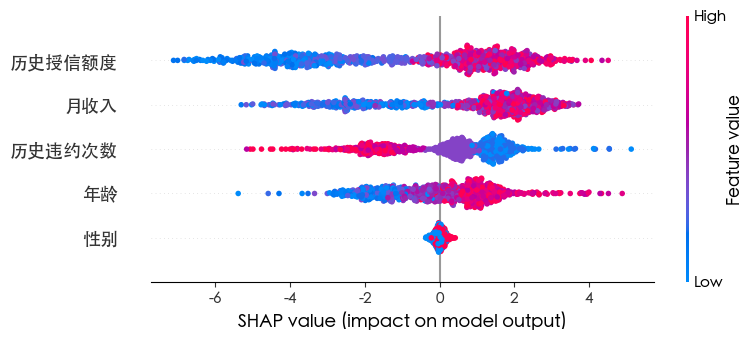
1 2 3 4 import shap explainer = shap.Explainer(best_xgb) shap_values = explainer(X) shap.summary_plot(shap_values, X)
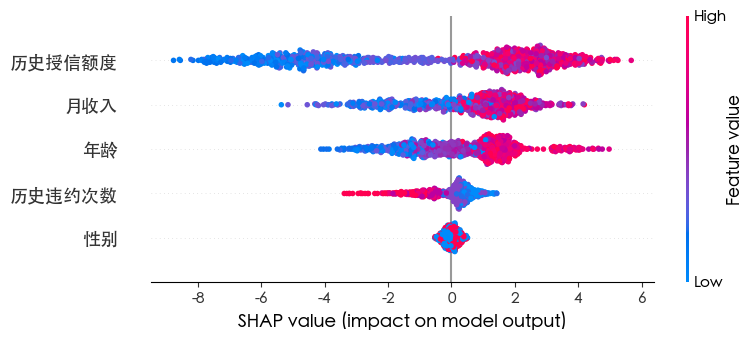
LGBM 1 2 3 4 5 6 7 8 9 10 11 12 13 14 15 16 17 18 19 20 from lightgbm import LGBMRegressor from sklearn.metrics import mean_squared_error, r2_score lgbm = LGBMRegressor(random_state=42) lgbm.fit(X_train, y_train) y_pred_lgbm = lgbm.predict(X_test) mse_lgbm = mean_squared_error(y_test, y_pred_lgbm) r2_lgbm = r2_score(y_test, y_pred_lgbm) print (f'LightGBM Mean Squared Error: {mse_lgbm}' )print (f'LightGBM R^2 Score: {r2_lgbm}' )feature_importances_lgbm = lgbm.feature_importances_ features = X.columns importance_df_lgbm = pd.DataFrame({'Feature' : features, 'Importance' : feature_importances_lgbm}) importance_df_lgbm.sort_values(by='Importance' , ascending=False, inplace=True) importance_df_lgbm explainer = shap.Explainer(lgbm) shap_values = explainer(X) shap.summary_plot(shap_values, X)
LightGBM Mean Squared Error: 25.26260176146583
随机森林 1 2 3 4 5 6 7 8 9 10 11 12 13 14 15 16 17 18 19 from sklearn.ensemble import RandomForestRegressor rm = RandomForestRegressor(random_state=42)rm.fit(X_train, y_train) y_pred_rm = rm.predict(X_test) mse_rm = mean_squared_error(y_test, y_pred_rm) r2_rm = r2_score(y_test, y_pred_rm) print (f'Random Forest Mean Squared Error: {mse_rm}' )print (f'Random Forest R^2 Score: {r2_rm}' )feature_importances_rm = rm.feature_importances_ features = X.columns importance_df_rm = pd.DataFrame({'Feature' : features, 'Importance' : feature_importances_rm}) importance_df_rm.sort_values(by='Importance' , ascending=False, inplace=True) importance_df_rm explainer = shap.Explainer(rm ) shap_values = explainer(X) shap.summary_plot(shap_values, X)
Random Forest Mean Squared Error: 22.497981999999997
LDA 1 2 3 4 5 6 7 8 9 10 11 12 13 14 15 from sklearn.discriminant_analysis import LinearDiscriminantAnalysis lda = LinearDiscriminantAnalysis() lda.fit(X_train, y_train) y_pred_lda = lda.predict(X_test) mse_lda = mean_squared_error(y_test, y_pred_lda) r2_lda = r2_score(y_test, y_pred_lda) print (f'Linear Discriminant Analysis Mean Squared Error: {mse_lda}' )print (f'Linear Discriminant Analysis R^2 Score: {r2_lda}' )feature_importances_lda = lda.coef_[0] features = X.columns importance_df_lda = pd.DataFrame({'Feature' : features, 'Importance' : feature_importances_lda}) importance_df_lda.sort_values(by='Importance' , ascending=False, inplace=True) importance_df_lda
Linear Discriminant Analysis Mean Squared Error: 30.66
KNN 1 2 3 4 5 6 7 8 9 10 from sklearn.neighbors import KNeighborsRegressor knn = KNeighborsRegressor(n_neighbors=5) knn.fit(X_train, y_train) y_pred_knn = knn.predict(X_test) mse_knn = mean_squared_error(y_test, y_pred_knn) r2_knn = r2_score(y_test, y_pred_knn) print (f'KNN Mean Squared Error: {mse_knn}' )print (f'KNN R^2 Score: {r2_knn}' )
KNN Mean Squared Error: 25.003800000000002
模型横向比较
模型
MSE ↓
R² ↑
特点总结
XGBoost (优化后)
22.01
0.680
树模型,调参后效果最好之一,兼顾偏差与方差,特征重要性可解释性强。
LightGBM
25.26
0.633
与XGBoost类似,但默认参数下稍逊,可能因数据量不大导致优势未显现。
随机森林
22.50
0.673
稳定性高,效果接近XGBoost,调参空间不如Boosting大。
LDA
30.66
0.554
线性判别方法,更适合分类;在回归任务上受限,表现最差。
KNN
25.00
0.636
简单直观,依赖局部邻域;在高维数据中容易过拟合或欠拟合。
差异分析
树模型(XGBoost / LightGBM / 随机森林)表现最佳
它们能捕捉非线性关系,适合处理信用评分这类复杂特征交互的任务。
XGBoost 调参后效果最好(R²≈0.68) ,说明该数据集对树模型的适配性很好。 随机森林 与 XGBoost 表现接近 ,但略逊,因为 Boosting 更好地优化了偏差。 LightGBM 在大数据下优势明显,但在你这种数据量(200左右样本)下未完全发挥。
线性方法(LDA)表现最差
信用评分与特征之间关系并非单纯线性,导致 LDA 只能捕捉有限信息。
R²≈0.55,MSE最大,说明解释力有限。
KNN 居中但不稳定
表现优于 LDA,但不如树模型。
优点是简单、无需训练;缺点是容易受到特征尺度影响,且在高维空间中“邻近”的意义变弱。
结论
最佳模型推荐:XGBoost(调参后) 随机森林 可作为备选基准模型,在稳定性上更强,但可解释性略弱。 LightGBM 如果数据规模增大 可能会超过XGBoost。 LDA 和 KNN 更适合作为参考或对比,实际预测能力有限。